Lord Ram connects with emotion, not distinction: Keshav Maurya
The deputy CM further said that the seven temples built in the Ram Temple complex weave together diverse streams of Indian philosophy and folk faith.
Emphasizing that the theme is the soul of a film and conflict its oxygen, Hirani delivered a masterclass workshop on the theme, “Film is Made on Two Tables — Writing and Editing: A Perspective”.




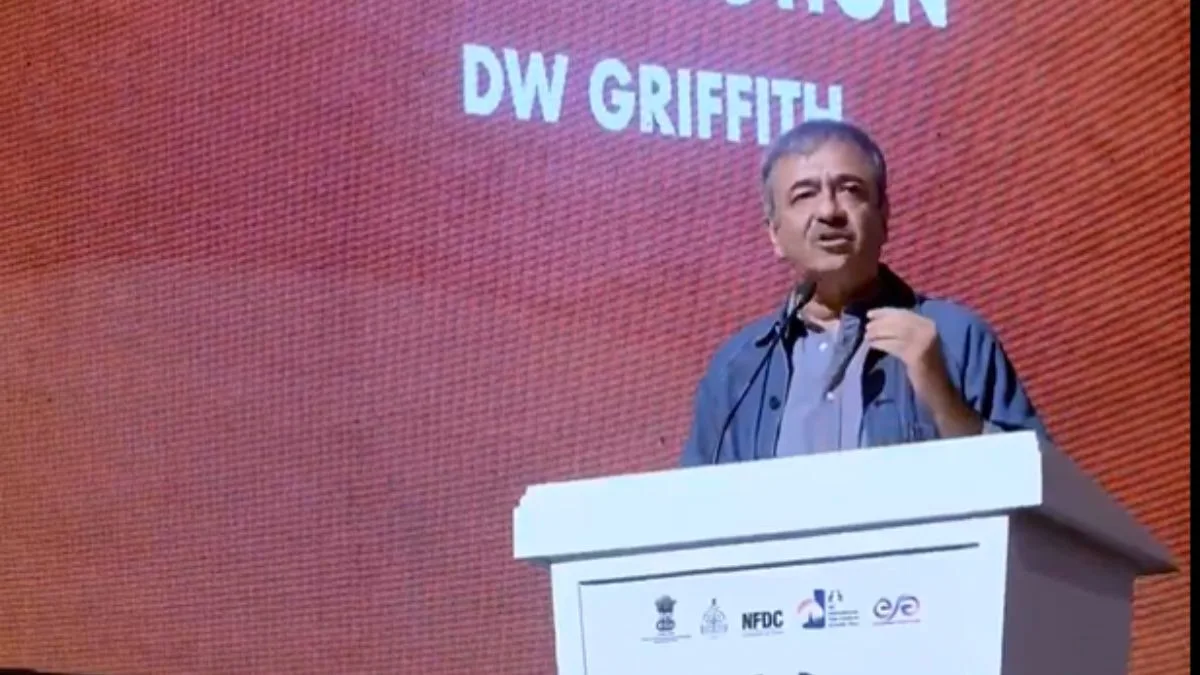
Screengrab: X/@IFFIGoa
“Writing is emotion imagined, editing is emotion experienced,” declared acclaimed filmmaker Raju Hirani, as he took the stage at Kala Academy during the ongoing International Film Festival of India 2025, here today.
Emphasizing that the theme is the soul of a film and conflict its oxygen, Hirani delivered a masterclass workshop on the theme, “Film is Made on Two Tables — Writing and Editing: A Perspective”.
Advertisement
Hirani began by capturing the essence of the writing process with poetic simplicity. “Writing is a place of dreaming.” He described how the writer enjoys boundless freedom — unlimited skies, perfect sunrises, flawless actors, no budgets and no constraints. But the moment these imagined scenes reach the editor’s table, reality inevitably transforms them.
Advertisement
“A film begins,” Hirani noted, “only when a character truly wants something. That desire becomes the heartbeat of the narrative. And conflict,” he added, “is oxygen — without it, nothing breathes.”
He urged writers to ground their stories in lived experience. “A good writer must pick triggers from life. Real experiences make stories incredible, unique, and deeply appealing,” he flagged. He also reminded the audience that exposition should be woven invisibly into drama, and that the theme, the film’s soul must whisper consistently beneath every scene.
Speaking with warmth about his first love — editing, Hirani illuminated the editor’s profound yet hidden power. “When the footage reaches the editing table,” he said, “everything becomes different. The editor reimagines the story. He is the unsung hero. His work is invisible, but it holds the film together,” he remarked.
Describing the editor’s toolkit, he explained that the unit of editing is the shot, and a single shot, placed in a different context, can completely transform meaning. “So powerful,” he smiled, “that an editor can flip a story 180 degrees.”
Quoting early cinema pioneers, Hirani recalled DW Griffith’s famous idea that “a good editor plays with your emotion.” He closed this segment with a striking truth that resonated across the room: “The writer writes the first draft. The editor writes the last.”
Hirani stressed that antagonists must possess as strong a point of view as protagonists. “Every character,” he said, “believes they are right. That is where the story’s electricity comes from. This clash of truths, this tension between perspectives, is what gives a narrative its pulse,” he added.
Advertisement